Israel’s parliament has passed legislation removing diplomatic immunity and essential service access for the UN agency that aids Palestinian refugees, intensifying a long-running confrontation between the government and the United Nations.
The law, approved by 59 votes to 7 in the Knesset, ends UNRWA’s exemption from Israeli jurisdiction and obliges Israeli utility and banking firms to discontinue water, electricity, communication, and financial services to the agency’s offices. It also authorizes authorities to seize two UNRWA buildings in Jerusalem without legal proceedings. The measure broadens restrictions introduced in 2024 that banned the agency from operating in Israeli territory and prohibited government bodies from engaging with it.
Supporters of the bill argue that UNRWA, formally the UN Relief and Works Agency for Palestine Refugees in the Near East, has become compromised by its alleged links to Hamas. Boaz Bismuth, chairman of the Knesset’s Foreign Affairs and Defense Committee, claimed that agency employees “participated in the October 7 attacks.” Israel contends that around 10% of UNRWA’s staff in Gaza have connections to militant groups—an accusation the agency rejects as politically motivated.
The International Court of Justice reached a different conclusion. In an advisory opinion issued in October, it said there is no legal basis for Israel to obstruct UNRWA’s operations, finding no evidence that the agency had violated neutrality requirements under international humanitarian law. The UN General Assembly later endorsed the court’s position by a wide margin.
An internal UN review found that nine employees may have taken part in the October 7, 2023, assault, prompting their dismissal; Israel had earlier claimed that at least 18 were involved. While the inquiry acknowledged limited misconduct, it concluded that no systemic collusion with Hamas could be established.
UNRWA, established in 1949, provides education, healthcare, and relief services to nearly six million Palestinians across Gaza, the West Bank, Jordan, Lebanon, and Syria. The latest Israeli move threatens to deepen the agency’s operational crisis at a time when humanitarian conditions in Gaza remain dire. Jordan’s Foreign Ministry denounced the law as “a clear violation of international law and the immunities granted to UN institutions.”
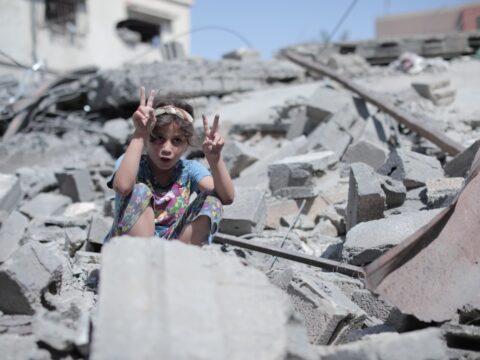
Photo credit: Ashraf Amra, CC BY-SA 3.0 IGO, via Wikimedia Commons